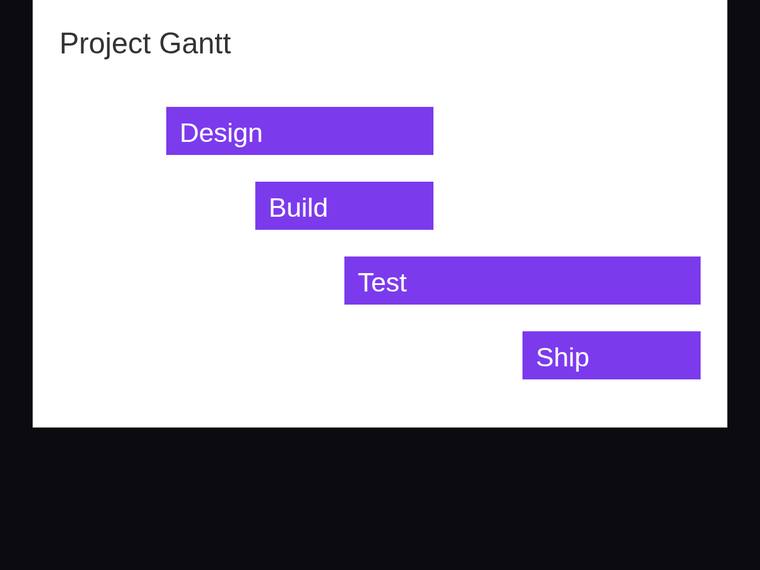
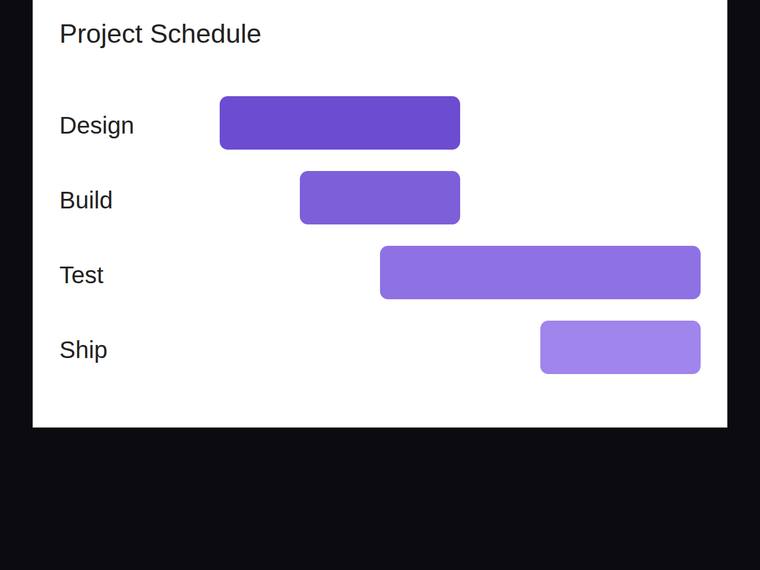
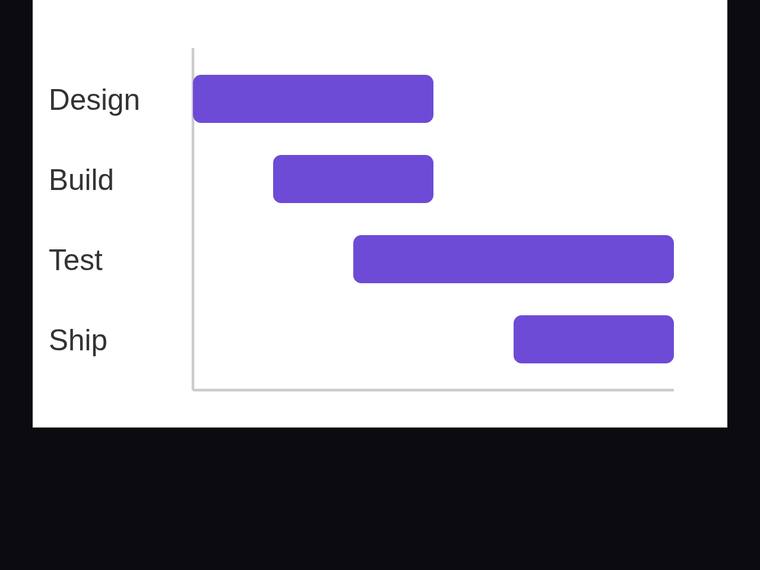
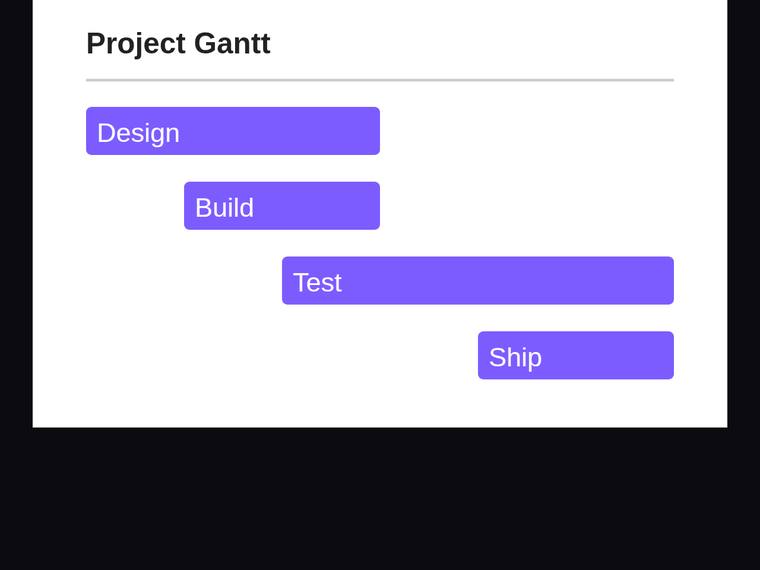
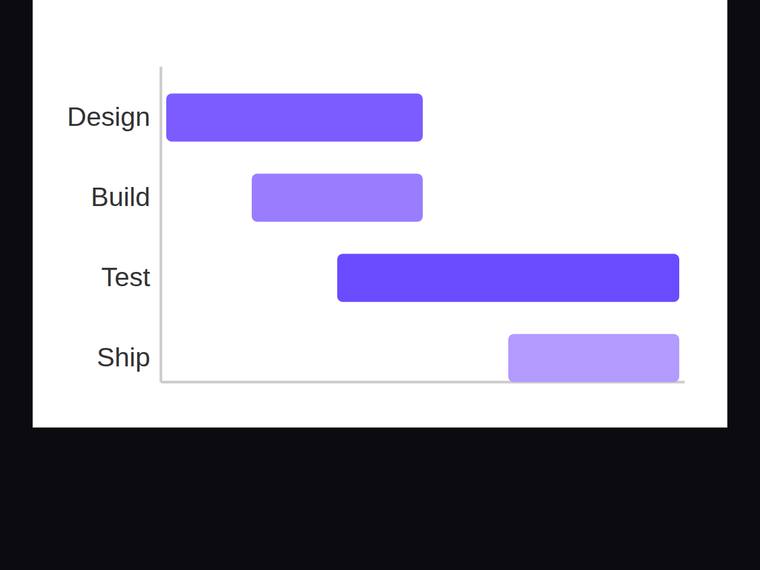
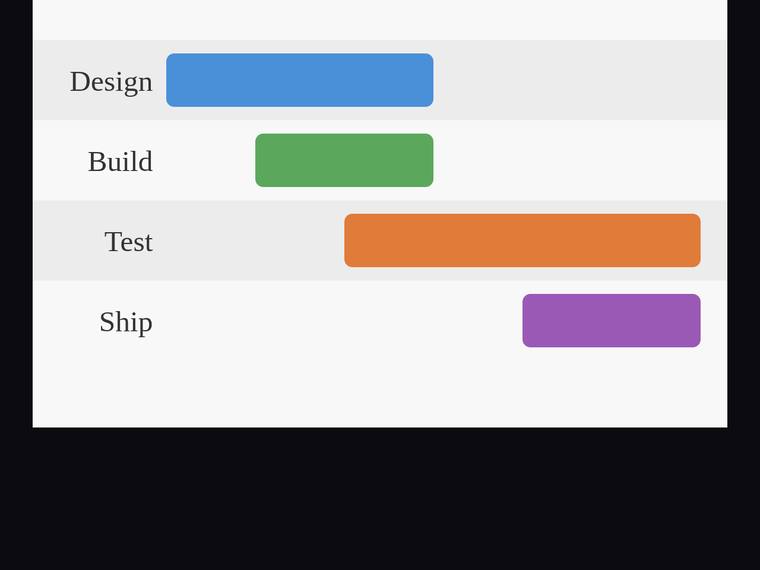
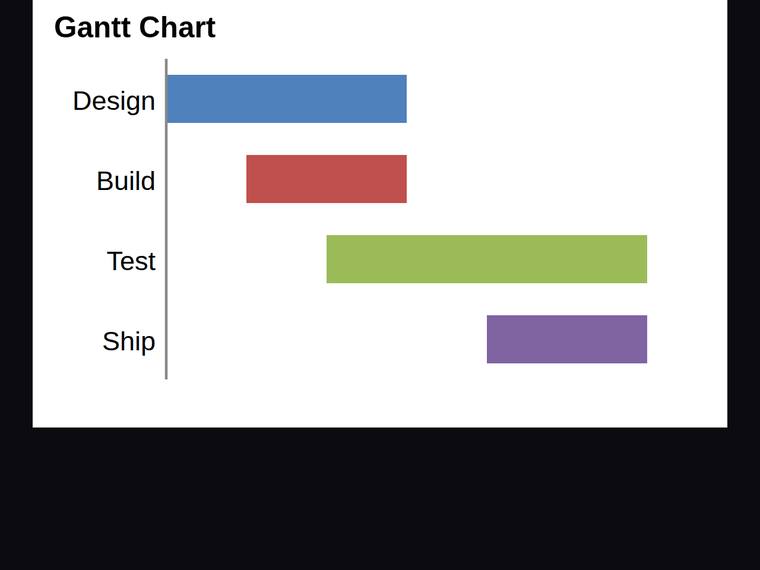
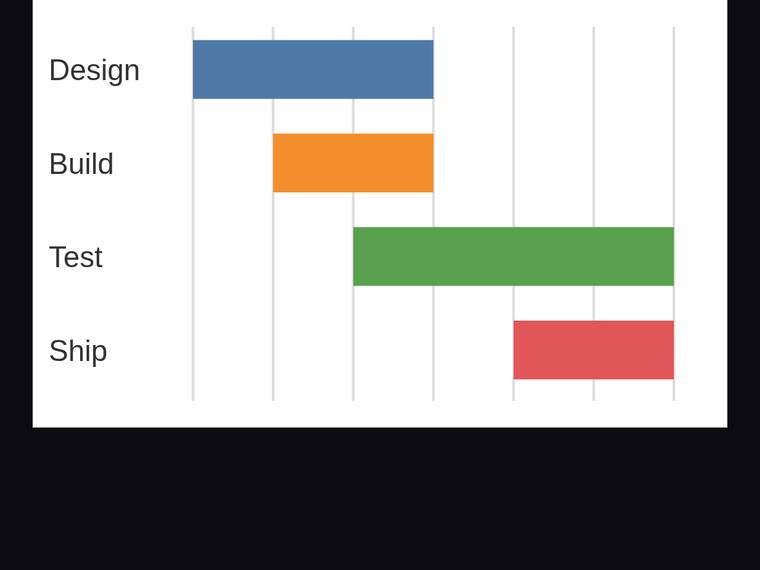
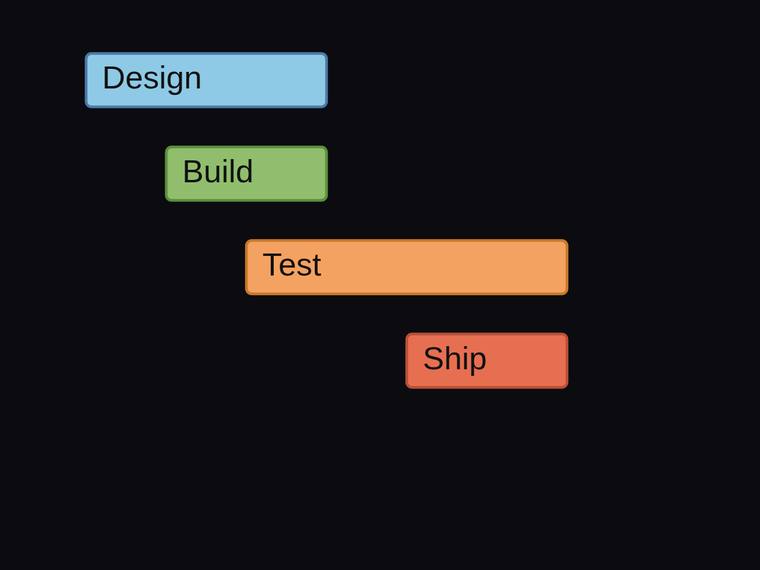
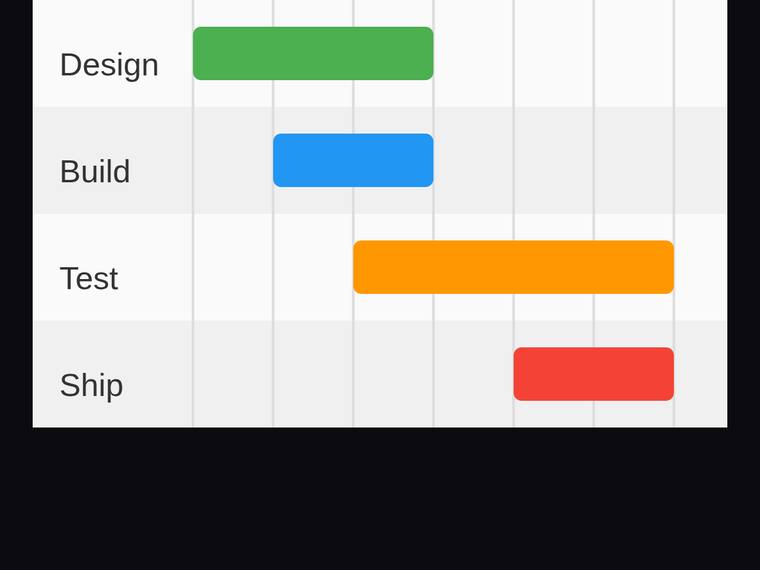
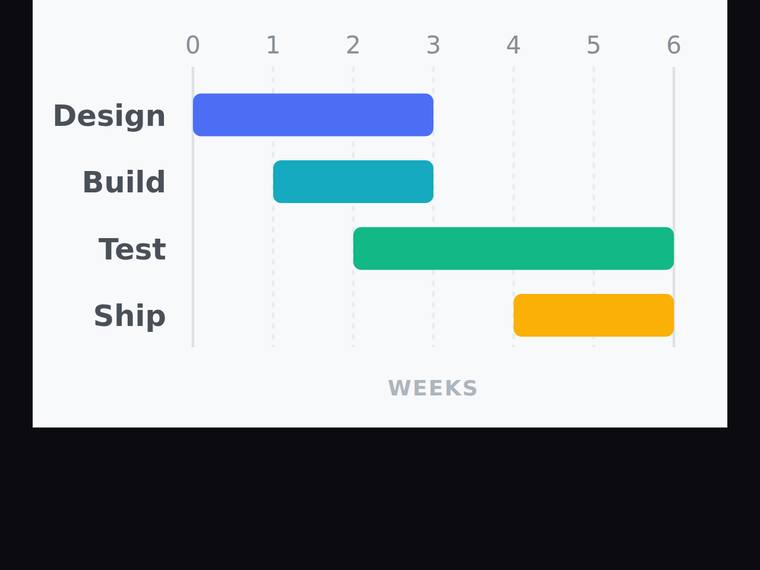
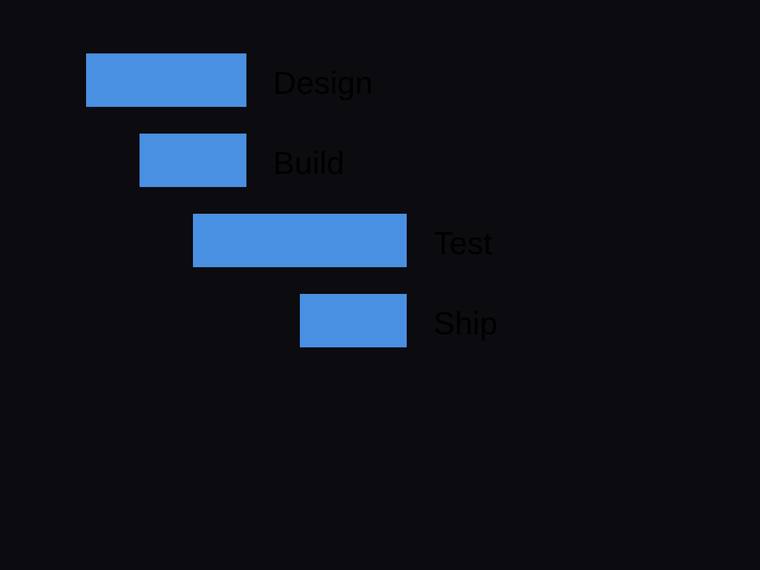
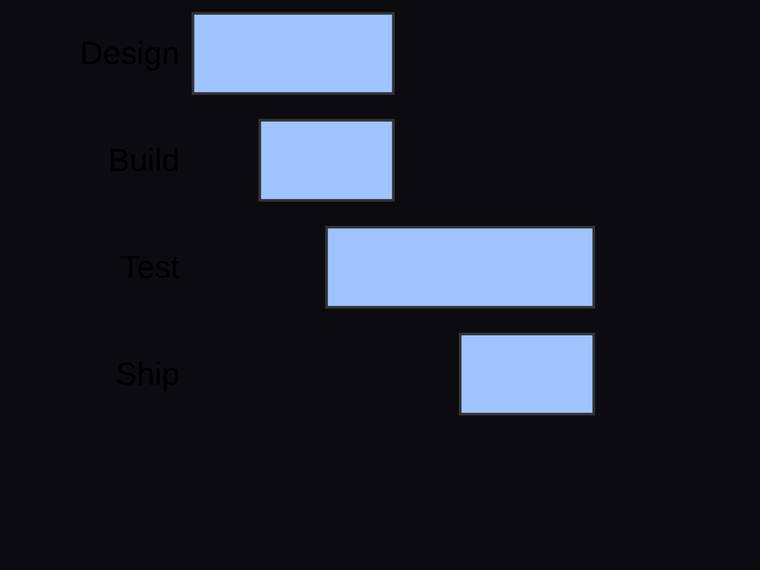
Gantt chart with proportional start offsets and durations
One task across 30 published runs. Inspect the scores and outputs together, with each run's execution method shown.
- Task
- DIAGR-0005
- Domain
- SVG and graphics
- Difficulty
- hard
Leading published run: claude-opus-4-8 (low reasoning) at 100.0% composite. Lowest: deepseek-v4-flash at 100.0%. 30 published runs shown on this task.
How this task was evaluated
Results are ordered by this task's published score. API runs use one prompt and one completion; agent runs use a coding harness with tools and iteration. Inspect the execution method when comparing results.
Objective scores use the benchmark's execution checks. Judge scores use a vision panel's fixed rubric; the published score leaves out a model's own family. Missing values are labelled rather than treated as zero.
Read the brief
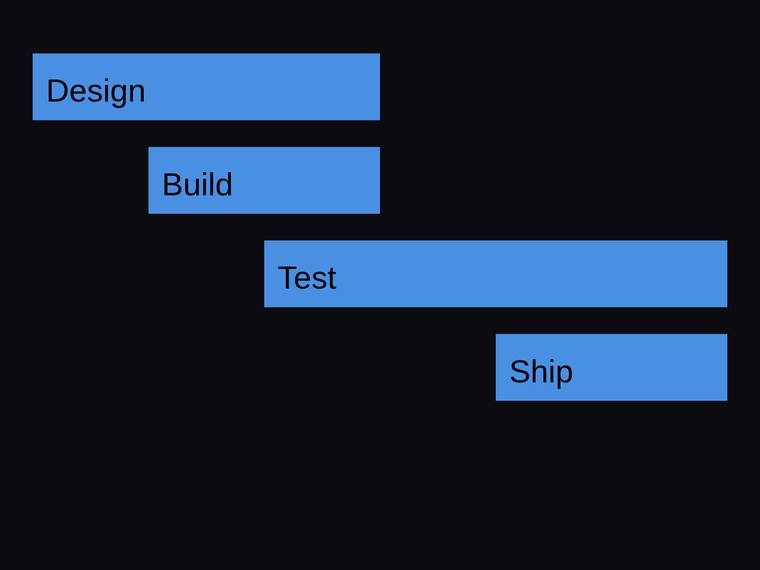
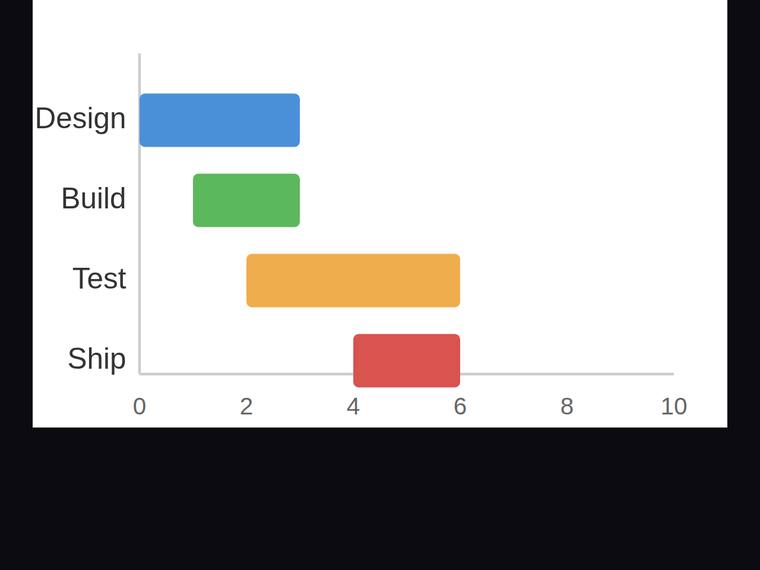
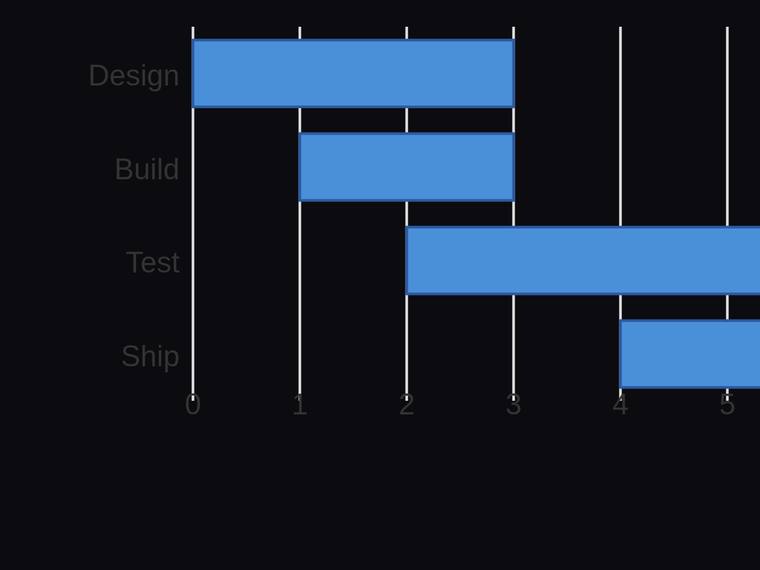
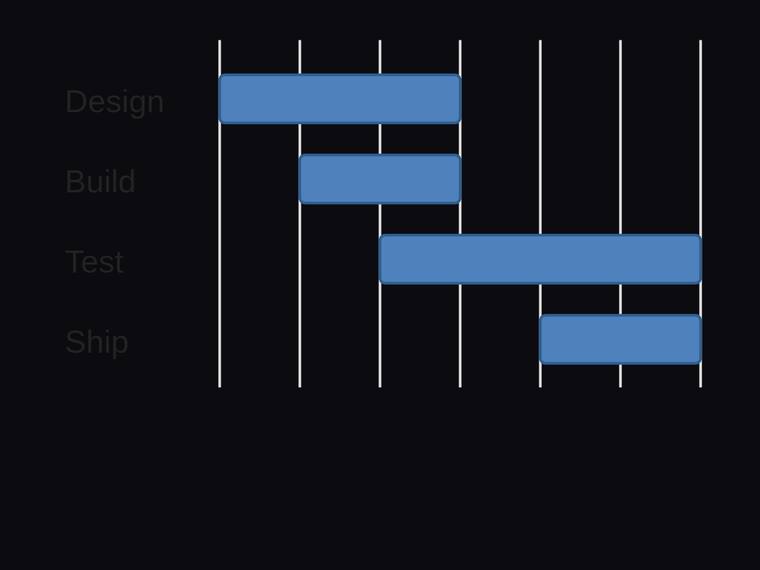
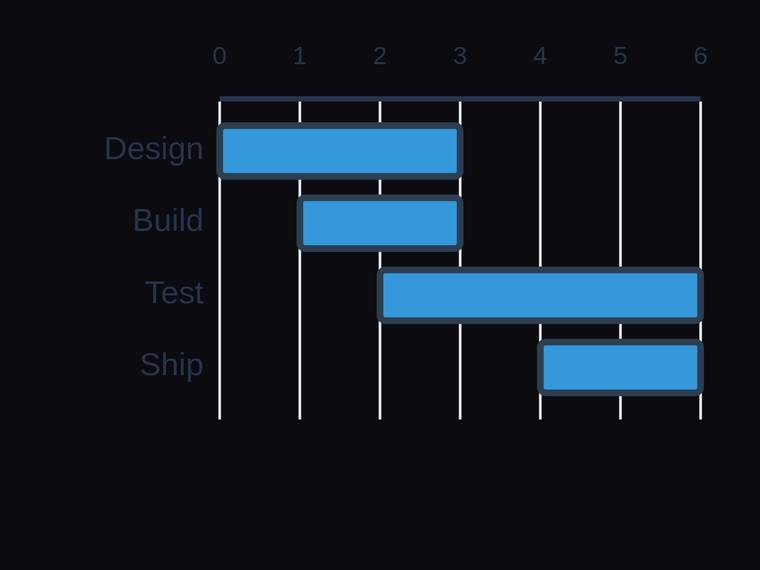
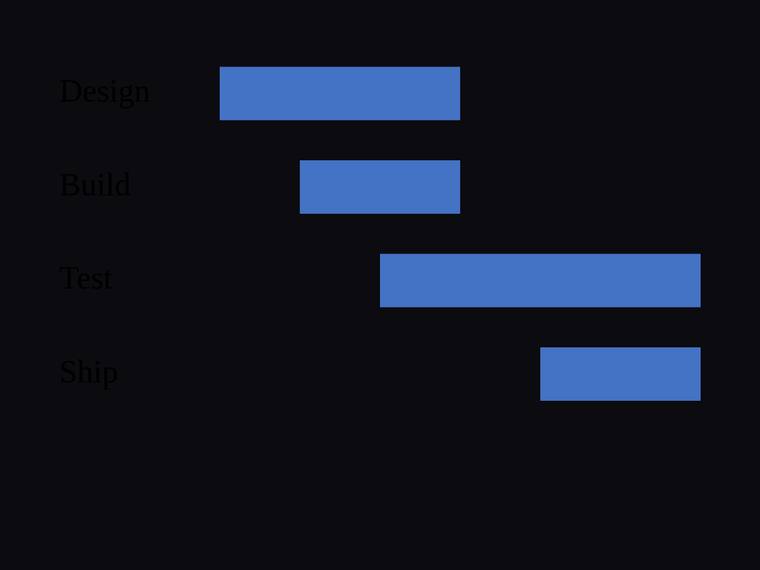
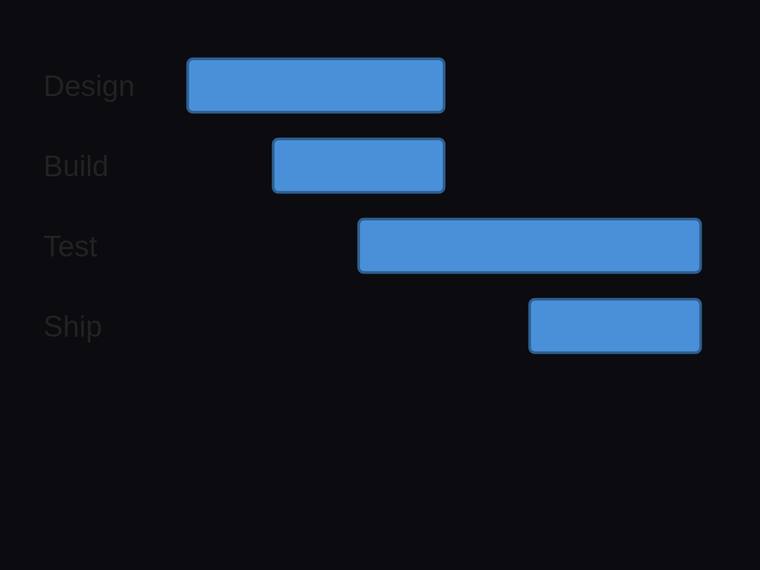
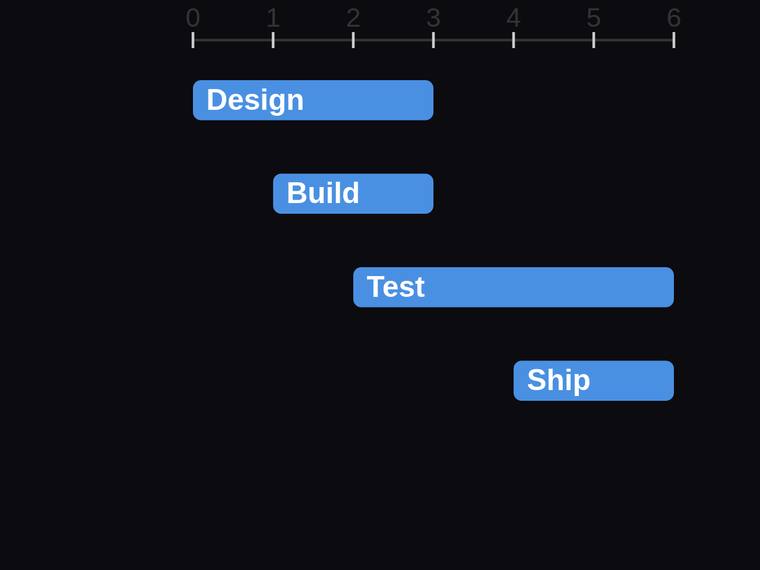
Draw a Gantt chart in SVG using a 260x160 viewBox. Write it to `chart.svg`. There are four task bars, each a `<rect class="task">` with the listed id, stacked in separate rows. Each bar's horizontal start (its left edge x) is proportional to the task's start week, and each bar's width is proportional to the task's duration in weeks. Tasks (id : label : start week : duration weeks): - t1 : Design : start 0 : duration 3 - t2 : Build : start 1 : duration 2 - t3 : Test : start 2 : duration 4 - t4 : Ship : start 4 : duration 2 So the start-week values map linearly onto the bars' left-edge x positions, and the width ratios match the duration ratios (the Test bar is the widest). Requirements: - Exactly four task bars (class="task"), in id order t1, t2, t3, t4 (document order). - Put each task label (Design, Build, Test, Ship) in a `<text>` element. - Vector primitives only: no raster images, no data: URIs, no base64, no <foreignObject>, no <script>, no external references.